
Forskning och utveckling inom Meteorologi
På den meteorologiska forskningsenheten är vi drygt fyrtio forskare och specialister inom alltifrån meteorologi, teoretisk fysik och atmosfärskemi till matematik och datavetenskap.
Vi arbetar med observationsdata, meteorologiska analyser och utveckling av beräkningsmodeller för regionala väderprognoser i Norden samt med fjärranalys, klimatanalys och luftkvalitet på urban till global skala. I grunden finns en kärna av kunskap om klassiska beräkningssystem, numeriska modeller och processförståelse samt vetenskaplig metod och kvalitet.
Vår forskning och utveckling ökar den kunskap som beräkningsmodellerna bygger på, förfinar beskrivningarna av de fysikaliska processerna i atmosfären och nära landytan, ökar upplösningen i modellerna och införlivar data från nya datakällor. Vi utvecklar kontinuerligt verksamheten genom framsteg inom högupplösta simuleringar, dataassimilering och digitala tvillingar. Samtidigt utforskar och använder vi AI och maskininlärningsmetoder där det tillför värde.
Vi är specialister inom olika observationstekniker och användning av dessa data, bland annat inom radar och satellit. Vår samlade kunskap bidrar till att öka användningen av fjärranalysdata både inom modellutveckling och inom olika typer av meteorologiska och klimatologiska analyser.

Hitta på sidan
Vi fokuserar vår forskning inom fem huvudsakliga forskningsområden.

Atmosfärskemi och luftföroreningsmodeller
Det luften omkring oss innehåller

Klimatövervakning och forskning med fjärranalys
Mer kunskap om klimatet från satellit och radar

Nowcasting och fjärranalys
Nya data till korta prognoser

Processer i atmosfären och vid ytan
Forskning för bättre väderprognoser
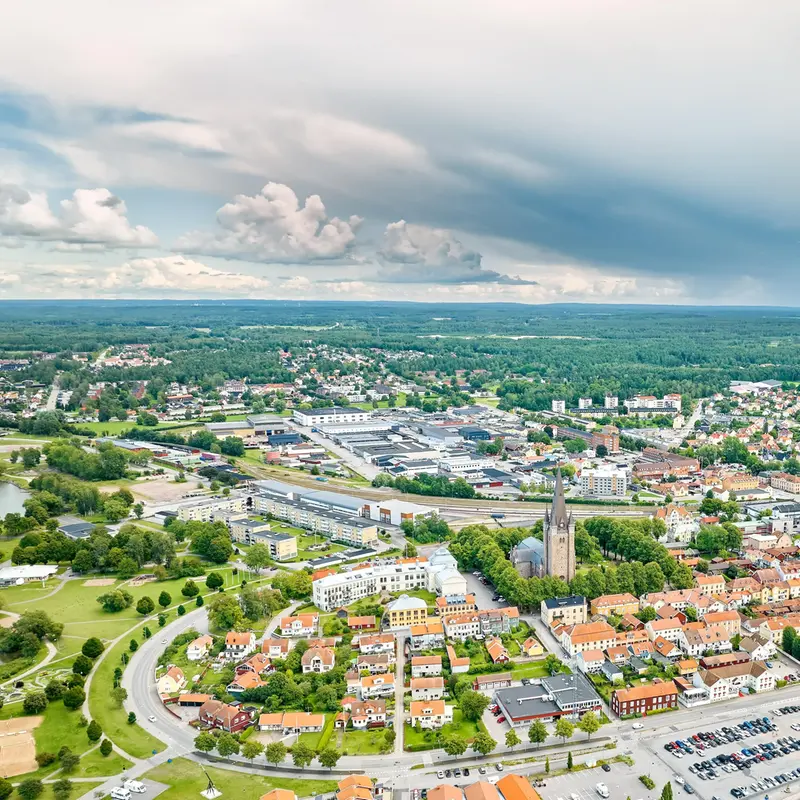
Urbant klimat och luftkvalitet
Fokus på värme och luftmiljö i städer
En stor del av vår forskning och utveckling bedrivs i projektform. Projekten är finansierade genom beviljade ansökningar hos forskningsråd, EU-program, internationella samarbetsorganisationer eller andra finansiärer. Några exempel på de projekt vi arbetar med just nu eller nyligen avslutat:
BRIGHT – Ökad kunskap och nya verktyg för att anpassa svenska städer till värme
Projektet BRIGHT syftar till att bidra till effektiv klimatanpassning genom ny kunskap, optimerade metoder, förbättrade verktyg och användaranpassad data som kan hjälpa svenska kommuner att bättre anpassa sin bebyggelse till framtida värmeböljor.CAMEO och CAMAERA – två forskningsprojekt som utvecklar Copernicus atmosfärstjänst
Copernicus Atmosphere Monitoring Service (CAMS) övervakar atmosfärens sammansättning. Nu ska två europeiska forskningsprojekt utveckla tjänsten. SMHI är en av partnerna.CARRA2 – En ny generation av Copernicus återanalys för Arktis
År 2021 släppte Copernicus klimattjänst (Climate Change Service, C3S) datasetet CARRA1, en 30-års återanalys av Arktis klimat (1991-2021). Från och med februari 2023 uppdateras CARRA månatligen med aktuella data, med en fördröjning på 2-3 månader. Nu har den andra fasen av projektet påbörjats, vilken kommer att utvidga...CERISE – Forskningsprojekt för att förbättra system för återanalys och säsongsprognoser
Projektet CERISE ska förbättra kvaliteten på Copernicus klimattjänsts (C3S) system för återanalyser och säsongsprognoser.Climate Monitoring SAF
Climate Monitoring SAF tar fram produkter för analys av molnighet och molnegenskaper, strålningsförhållanden (både vid jordytan och vid toppen av atmosfären), atmosfärisk vattenånga och nederbörd. SMHI är framför allt inblandad i analysen av molnparametrar där vi har en ledande position.
En kärna i vår verksamhet är utveckling av numeriska beräkningssystem. Vi arbetar med forskning och utveckling för att ständigt förbättra dessa system genom högre upplösning, mer utvecklade processbeskrivningar och nya datakällor.

Vi som jobbar med meteorologisk forskning
Enheten leds av Jorge Amorim tillsammans med Patrick Samuelsson och Cecilia Bennet.
Vi publicerar våra forskningsresultat i vetenskapligt granskade tidskrifter och i SMHIs egna rapportserier. De två senaste publikationerna från SMHIs meteorologiska forskning är:
Quantification of population exposure to NO<sub>2</sub>, PM<sub>2.5</sub>, PM<sub>10</sub> and O<sub>3</sub> and estimated health impacts for 2023 and 2030
Christian Asker, Fredrik Windmark, Mattias Jakobsson, Johan Arvelius, Karolina Siegel, Bertil Forsberg, Johan Sommar
I: RMK, Rapport Meteorologi och Klimatologi
2026
Sammanfattning
A recently developed air quality modelling system is used to produce high-resolution concentrations (with street-canyon effects not included) of air pollutants (NO2, PM2.5,PM10 and O3) over all of Sweden. As a next step the population exposure is quantified and associated health impacts and socioeconomic costs for the years 2023 and 2030 are calculated.
The concentrations of NO2 are predicted to decrease from 2023 to 2030 due to lower traffic exhaust emissions. Modelled exceedances of the air quality standard for the yearly mean of NO2 are limited to the nearest vicinity of a few large roads in 2023, while there are no exceedances for 2030 (excluding street-canyon effects). The average population exposure of NO2 decreases from 4.0 μg/m3 to 2.9 μg/m3.
PM10 and PM2.5 concentrations in 2030 are predicted to remain on a similar level as in 2023, with a possible slight upward trend. The reasons for increasing concentrations are more traffic and thus higher levels of road, tyre and brake wear particles, as well as slightly higher regional background levels. Modelled exceedances of of the air quality standard for the yearly mean of PM2.5 are not expected in neither 2023 nor 2030, while PM10 exceedances are limited to the vicinity of larger roads in both years (again excluding street-canyon effects). The average population exposure of particles shows verylittle variation between 2023 and 2030 (from 8.1 to 8.2 μg/m3 for PM10 and 4.6 to 4.7 μg/m3 for PM2.5).
O3 concentrations are predicted to stay at similar levels in 2030 compared to 2023, with reductions in rural areas and locally increased concentrations close to larger roads. Thethe average population exposure changes only slightly from 57 μg/m3 to 56 μg/m3
The following health impact assessment is based on NO2, local and regional PM2.5, respectively, and wear particles in the PM10 fraction, combining the high-resolution exposure modelling with concentration–response functions from recent epidemiological evidence.
For 2023, the total number of incident mortality cases is estimated at approximately 5 966 (95% CI: 3 905–8 035), with contributions from regional background PM2.5, locally generated PM2.5, wear particles (PM₁₀), and NO2. Compared with previous assessments, the methodology distinguishes more clearly between these sources, including a separate treatment of wear particles using PM₁₀-based risk estimates.
The analysis also includes a broader set of morbidity outcomes. Large numbers of cases are estimated for functional outcomes, including ~680 000 (579 000–782 000) work loss days and ~48 000 (15 700–80 400) school absence days, showing substantial impacts on productivity. Among chronic diseases, estimates include 1 083 COPD cases, 720 dementia cases, 374 diabetes cases, and 251 stroke cases annually. Additional outcomes newly included in the assessment comprise autism spectrum disorder (ASD) (1 422 cases) andallergic rhinitis (148 cases), based on emerging evidence for air pollution effects in children.
In the scenario work for 2030, in total a lower estimated mortality attributed to air pollution was estimated (5 627 cases, e.g. 6% lower), however both of the cases attributed to local wear particles and regional background PM2.5 were higher (621 vs 554 and 3601 vs 3467 cases, respectively).
Methodologically, mortality estimation has been refined by separating PM2.5 into regional background and locally generated components, while wear particles are assessedusing PM₁₀ exposure–response functions. This adjustment addresses the contribution of coarse particles from non-exhaust traffic emissions and avoids underestimation of their health effects, although the uncertainty due to limitations in source-specific risk estimates remains.
Long-term (1990-2023) reanalysis of phytotoxic ozone dose (PODY) for Sweden
Magnuz Engardt, Camilla Andersson
I: RMK, Rapport Meteorologi och Klimatologi
2026
Sammanfattning
We present a long-term (1990-2023) reanalysis of a flux-based metrics describing ozone uptake to vegetation and the associated risk of ozone damage (Phytotoxic Ozone Dose above a flux threshold of Y, PODY). The dataset covers Sweden at 5.5 km × 5.5 km resolution and includes two generic and four specific PODY receptors (POD1gen for deciduous trees, POD1spec for birch and spruce, POD3gen for crops, and POD6spec for potato and wheat). The PODY reanalysis was constructed using the MATCH Sweden System and input meteorology from the Copernicus European Regional Reanalysis system.
PODY, for all receptors, is highest in the south of Sweden and lowest in the Scandinavian mountains. The estimated PODY for birch and spruce are well above the critical levels set by UNECE in practically all of Sweden. For wheat, the critical limits for grain yield and grain weight are exceeded in most of south and central Sweden.
We find no significant trend in PODY in most areas of Sweden, except for central Sweden for generic deciduous trees and birch (negative) and southern Sweden for potato (positive). These changes are, however, likely influenced the introduction of new observation sites in the ozone analyses. Based on the large inter-annual variation of all receptors during the 1990-2023 period we argue that there is little evidence of temporal trends in any of the receptors during the considered period.
To highlight the effects of varying ozone data as input to the PODY calculations we also performed an additional PODY reanalysis using a selection of consistent ozone observations for the period 1990-2013.
Forskningsnyheter
Erfarenhetsutbyte visar väg för vädertjänster anpassade för drönare
Med fler drönare i luftrummet ökar efterfrågan på anpassade flygvädertjänster för drönarpiloter och obemannat flyg. I forskningsprojektet BÄVER samarbetar LFV, SMHI och Lunds universitet för att undersöka hur man kan utveckla vädertjänster som möter dessa behov. Drygt halvvägs in i projektet har projektets intressenter...Ny syn på interaktion mellan moln och trädens transpiration i europeiska skogar
Ny forskning visar ett tydligt samband mellan olika molntyper och transpiration i europeiska skogar. Ett internationellt grupp forskare har beräknat hur det påverkar mängden fukt som träden avger till atmosfären när molnigheten förändras, något som också påverkar vattnets kretslopp på jorden.SMHI-podden tittar i backspegeln: Hur Tjernobylolyckan kom att utveckla SMHIs luftmiljöforskning
När förhöjda strålningsnivåer upptäcktes vid kärnkraftverket i Forsmark den 28 april 1986 stod det snart klart att radioaktiviteten inte kom från ett lokalt utsläpp. Med en förhållandevis enkel beräkning kunde en SMHI-medarbetare visa att utsläppet troligen kom från sydvästra Sovjetunionen. Det lade grunden till stora ...